Grace Under Pressure

Grace Under Pressure

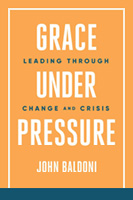
REMAINING clam in moments of urgency when things are coming apart at the seams is the subject of Grace Under Pressure: Leading Through Change and Crisis by John Baldoni.

Good leaders do three things writes Baldoni. One they take care of their people. Two, they take care of themselves. And three, they prepare for the future. What pulls them all together is grace. Grace is the “catalyst for the greater good.” Grace is critical to creating the connection with others that leads to positive forward movement. “When it comes to dealing with change and crisis, grace becomes evident in how we treat one another.”

Baldoni looks at the three characteristics of good leaders through the lens of grace. In all three areas Baldoni stresses the importance of community. It’s good for the organization, it’s good for you, and it’s good moving forward into the future and whatever it may bring. “Communities by nature are places where people feel they belong.” But it’s more than that, says Baldoni. “It is more than a place to work; it becomes a place to be.”

We seek to create community where individuals feel empowered to lead with conviction rooted in wisdom, compassion gained from suffering, and good examples learned from experience.

Three lessons regarding community:

  1. Lay down your baggage. “When you belong to a community, you are not your resume. You become a fellow contributor.”
  2. Find ways to work with people unlike yourself. “Learning to get along is vital to becoming a whole person.
  3. Build trust by showing trust. “How often do we wait for the other person to make the first move?”

Grace makes this possible. “Grace facilitates our ability to connect with ourselves more genuinely so that we can contribute more humanly with others. Such connections are essential to keep oneself together when everything around seems to be falling apart.”

Here are some thoughts in brief from each of the three sections on how to demonstrate grace under pressure:

Good Leaders Take Care of Their People

Build resilience through divergent thinking throughout your organization. Become a better listener. Be direct and honest but inspire hope in the face of uncertainty and crisis. How can I make things better for others? How can I find humor in the situation?

Good Leaders Take Care of Themselves

Anchor yourself in the values that are most important to you. Even in a changing world they will not change. Prioritize what is most important. Be intentional. Confront your biases and be willing to change. Assume the best in others.

Good Leaders Prepare for the Future

A crisis often elicits innovation. It is important that we are open to it and encourage it by listening to others. Be patient. “Having patience gives us the space to learn and enables the heart to direct and our character to rise to the fore.” Baldoni advises, “Speed to the chase, but wait for the opportunity.”

Grace is more than a thought. It is a practice. It is something we do. In the final section of the book, Baldoni presents pithy and practical chapters for practicing grace under pressure. He highlights the many and sometime subtle mindsets that motivate grace into action.

At the end of the book, Baldoni summarizes his thoughts in a handbook and challenges us with a Grace Under Pressure Self-Assessment.

Grace Under Pressure means meeting:

Anger with composure.

Denigration with respect.

Sadness with abundance.

Insults with smiles.

Selfishness with selflessness.

Hoarding with generosity.

Life with gratitude.

* * *
Follow us on Instagram and Twitter for additional leadership and personal development ideas.

* * *


 

Explore More

Grace Grace Notes

from The Leading Blog: A Leadership Blog https://ift.tt/HqSdr8x
via WordPress

A Cure for the Common Company

Cure for the Common Company

IT SHOULD go without saying that the health and well-being of employees have a direct impact on the success of an organization. Yet, it is unusual for an organization to put it on the high-priority list along with profitability and customer service.

The solution is to build it into the culture of the organization. Willpower alone won’t do it. Chief Medical Director of Employee Health and Well-Being at John Hopkins Medicine, Richard Safeer, provides six building blocks to do that in A Cure for the Common Company.

1. Shared Values

Including employees through conversation or, in most cases, online surveys is a good way to know the values are shared. “Don’t try to sweep discontent under the rug. As a manger or leader, if you interact with an employee who doesn’t care for the shared values of the organization, try to help them find their personal connection.”

The challenge, of course, is getting a refined set of values and definition of well-being with the buy-in of dozens, hundreds, or thousands of employees, all of whom have their own values and cultures they bring to work with them every day.

2. Social Climate

“Leaders can promote a positive social climate by building a sense of community, fostering positive attitudes, and creating a shared vision.” Questions to ask include, “What process does your organization have in place to help new employees feel like they are part of the team right away?” “What opportunities do you create for employees to socialize?” “What volunteering opportunities has the organization provided for your employees?”

3. Norms

Norms are the way the organization does what it does—behaviors that we do without much thought. “In organizations around the world, norms that run counter to what is healthy for most people are rampant.” It’s not just free donuts but work hours, after-hour emails, and eating in front of your computer.

“Norms can be identified, and they can be changed, and when we make the effort, we can have a profound positive impact on people, teams, and organizations.” Knowing the impact of soda on the health of the employees, Safeer began tackling that at John Hopkins:

I took a stroll through our buildings. Sure enough, there was soda everywhere: the cafeteria, vending machines, gift shops. It was served at our meetings. Our culture embraced unhealthy beverages. The widespread presence of soda, along with visual cues, product placement, and financial incentive (at the time, a soda cost less than the same size bottle of water) were all contributing to a culture of unhealthy nutrition and making it easier for our workforce to accept that drinking soda was the norm.

4. Culture Connection Points

A cultural connection point is where the design of the workplace acts upon our well-being. “Cultural connection point can influence healthy behaviors and attitude, or they can be complicit in unhealthy behaviors and attitudes.” Connection points like the green leaf symbol tagged to healthy foods, choices placed at eye-level, fitness classes, rewards and recognition all help to support healthy life choices.

5. Peer Support

Willpower is not a good strategy. Peers can provide support and help to build subcultures that encourage healthy choices. “Peer support is unique in that it is based on a trusted relationship, is ongoing, and is grounded in a familiarity with day-to-day circumstances.”

6. Leadership Engagement

Well-Being needs to be on the leadership agenda along with everything else like finance and customer service. Participate in well-being initiatives. “Well-being is not an expense, it is an investment, and without it, you’ll end up with ‘No People, No Profit.’”

Leaders need to eliminate organizational speed-bumps. Safeer points out nine speed-bumps like all talk, no action, a lack of accountability, losing focus, and moving too fast.

The building blocks are pretty straightforward, but part of the challenge is dealing with all of the various subcultures that exist within the organization. While you are trying to create a culture pointing in one direction, there may be subcultures that point its members in a completely different direction, like that group that smokes behind the building.

Subcultures do not have to be solely formed around work-related elements. They can be formed around common interests of a group, such as jogging or sharing the same religious beliefs.

Subcultures often have a more powerful influence on their members than the broader culture because the behaviors, attitudes, and beliefs of the members of a subculture are more deeply intertwined with each other.

* * *
Follow us on Instagram and Twitter for additional leadership and personal development ideas.

* * *

 

Explore More

Jim Davis Wellness Beyond Performance

from The Leading Blog: A Leadership Blog https://ift.tt/xyanr4d
via WordPress

Leading Thoughts for April 13, 2023

Leading Thoughts

IDEAS shared have the power to expand perspectives, change thinking, and move lives. Here are two ideas for the curious mind to engage with:

I.

Laura Gassner Otting on just taking action:

“When struggling to make big life choices—leaving a job, ending a relationship, seeking more education, quitting smoking—studies show people who flip a coin and ‘go for it’ regardless of the outcome are more satisfied with their decisions and much happier six months later than those whose coin toss instructed them to maintain the status quo. Action beats stagnation. When you’re unsure about what to do, you’ll be happiest if you just choose something to do.”

Source: Wonderhell: Why Success Doesn’t Feel Like It Should . . . and What to Do About It

II.

Admiral William H. McRaven on death before dishonor:

“Leadership is difficult because it is a human interaction, and nothing is more daunting, more frustrating, more complex than trying to lead men and women in tough times.

<br>To live life above the common level of life: to be noble when other may be unprincipled, to be honorable when others many be shameless, to be men and women of integrity when others may resort to dishonesty. What I found in leading and being led by great offices from all branches of service was the importance of character and having a personal code of honor to help guide you through the difficult times.

Source: The Wisdom of the Bullfrog: Leadership Made Simple (But Not Easy)

* * *

Look for these ideas every Thursday on the Leading Blog. Find more ideas on the LeadingThoughts index.

* * *
Like us on Instagram and Facebook for additional leadership and personal development ideas.


Explore More

Leading Thoughts Whats New in Leadership Books

from The Leading Blog: A Leadership Blog https://ift.tt/VojXfx2
via WordPress

Is Your Workplace Plagued by Disrespect? Take This Step to Disarm It

Workplace Plagued by Disrespect

NAME-CALLING. Stereotyping. Micromanaging. Foul language.

Is your workplace a hotbed of disrespect—and are productivity and collaboration tanking because of it?

When co-workers, managers, and their subordinates lose respect for one another, it negatively impacts their work and the work of the people around them. Some organizations respond with well-meaning exhortations to “just get along,” or they encourage private chats with human resources or senior management. Yet quite often, there’s no action taken at all.

If someone’s disrespectful behavior crosses a policy or legal line, there may be an investigation followed by disciplinary action, interventional coaching, a lateral transfer, demotion, or termination. Or—once again—there may be nothing done at all.

Is there a better way to address and curb disrespect at work? Without a doubt, yes.

At the Center for Respectful Leadership, we believe that Coaching for Respect(CfR) is something every organization should consider trying first (even if they rule it out) before moving to more formal, investigative, disciplinary, or legal remedies.

At the core of this process is a simple question: What do you respect in the other person?

We’ve found that when co-workers clash over disrespectful behavior or language, what they do respect in their colleagues isn’t completely obscured. It’s just being overridden by intense negative feelings and emotions.

Once the “what happened”—the intentions, actions, impacts, and perceptions—are uncovered and explored through coaching and rational discussion, what people respect in each other is much easier to see. And their work environment will improve because of it.

Three Common Areas of Respect

Typically, what we respect in our work colleagues falls into three areas or attributes:

  • Knowledge and experience (and position attained as a result)
  • Talents and skills
  • The way a person treats us and others.

By having people identify precisely what they respect in others, they’ll start to break down hardened perceptions, such as an employee labeling a colleague as a “disrespectful person” or the accused suggesting the aggrieved party is “too sensitive” or “a complainer.”

Ideally, you’re trying to get the sparring parties to identify something they respect that relates to their work together. For example, an aggrieved employee may respect a particular skill the accused has and understand that without it, their own work will be much harder, or impossible, to accomplish.

Be warned: This can be a challenging process. Strong, negative feelings make some people resistant to seeing offenders in anything but a negative light. You’re going to have to work hard here and be persistent, respectfully, of course!

Ask for Specifics

Ask the parties to specifically name the traits and attributes they respect in each other. What events, times, and places have showcased these traits in the past?

Don’t accept “There’s nothing I respect in them” as a final answer because if you do, you won’t be able to move forward with the process.

Here are some approaches and opening lines you might use:

  • What would you say the organization values in this person?
  • Have you witnessed your colleague doing quality work? Tell me more about it.
  • Have you witnessed your teammate treating others well?
  • Do your co-workers respect this person? If so, why?
  • Looking at their knowledge, experience, talents, or skills, is there anything you respect—even a little bit?
  • How would you answer these questions if you could set aside your feelings?

The bottom line: We don’t have to like a person to work with them, but we do have to have a level of respect for them. Without respect between co-workers, it’s almost impossible to work effectively and productively.

Next Steps

Identifying respected traits and attributes is just one step of Coaching for Respect.™ If you have colleagues who have fallen out with each other due to perceived disrespectful behaviors—and if you have the willingness, the positional authority, and the patience to try something supportive and collaborative first—the CfR process may be exactly what’s needed to turn that relationship around.

* * *

Leading Forum

Gregg Ward is the founder and executive director of the Center for Respectful Leadership and a highly sought-after speaker, facilitator, and executive coach. He’s the author of the award-winning bestseller The Respectful Leader: Seven Ways to Influence Without Intimidation and its follow-up release, Restoring Respect. Learn more at RestoringRespectBook.com.

* * *
Follow us on Instagram and Twitter for additional leadership and personal development ideas.

* * *

 

Explore More

Earn Respect 12 Rules of Respect

from The Leading Blog: A Leadership Blog https://ift.tt/4THUXhi
via WordPress

Leading Thoughts for April 6, 2023

Leading Thoughts

IDEAS shared have the power to expand perspectives, change thinking, and move lives. Here are two ideas for the curious mind to engage with:

I.

Dave Ramsey on momentum:

“Momentum is an interesting and somewhat elusive thing. When you have momentum in any area of your life you look better than you are. When your star is shining everyone thinks you are smarter and prettier than you really are. Conversely when you don’t have momentum you are better than you look. What we discovered is that momentum is not a random lightning strike, but on the contrary, it is actually created.”

Source: EntreLeadership: 20 Years of Practical Business Wisdom from the Trenches

II.

Associate professor Mark de Rond on lovable fools and competent jerks:

“The analysis suggests that if someone is strongly disliked, it is almost irrelevant whether or not he is competent. By contrast, if someone is liked, her colleagues will seek out every bit of competence she has to offer, meaning that a little likeability has far more mileage than competence in making someone a desirable team player.”

Source: There Is an I in Team: What Elite Athletes and Coaches Really Know About High Performance

* * *

Look for these ideas every Thursday on the Leading Blog. Find more ideas on the LeadingThoughts index.

* * *
Like us on Instagram and Facebook for additional leadership and personal development ideas.


Explore More

Leading Thoughts Whats New in Leadership Books

from The Leading Blog: A Leadership Blog https://ift.tt/zrEuyK0
via WordPress

First Look: Leadership Books for April 2023

First Look Books

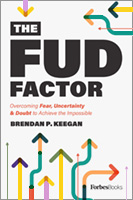
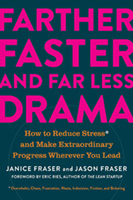
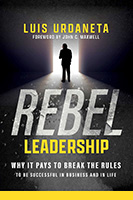
HERE’S A LOOK at some of the best leadership books to be released in April 2023 curated just for you. Be sure to check out the other great titles being offered this month.


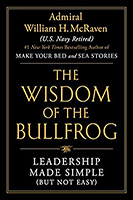
9781538707944The Wisdom of the Bullfrog: Leadership Made Simple (But Not Easy) by Admiral William H. McRaven

The title “Bullfrog” is given to the Navy SEAL who has served the longest on active duty. Admiral McRaven was honored to receive this honor in 2011 when he took charge of the United States Special Operations Command. When McRaven retired in 2014, he had 37 years as a Navy SEAL under his belt, leading men and women at every level of the special operations community. During those four decades, Admiral McRaven dealt with every conceivable leadership challenge, from commanding combat operations—including the capture of Saddam Hussein, the rescue of Captain Phillips, and the raid for Osama bin Laden. THE WISDOM OF THE BULLFROG draws on these and countless other experiences from Admiral McRaven’s incredible life, including crisis situations, management debates, organizational transitions, and ethical dilemmas, to provide readers with the most important leadership lessons he has learned over the course of his forty years of service.

9781637587560Grace Under Pressure: Leading Through Change and Crisis by John Baldoni

Grace Under Pressure: Leading Through Change and Crisis focuses on three things leaders need to do when change and adversity strike: take care of their people, take care of themselves, and prepare for the future. And they must do it all with a sense of grace—calmly, collectedly, and compassionately. He shares his expertise here, focusing on how leaders need to prepare for change by focusing on what matters most—their people. Among the themes Baldoni explores are fear and loss as well as empathy, resilience, and hope. This book also provides a roadmap for leaders seeking to create community as they meet the coming challenges with dignity and grace.

9780062684165An Ordinary Man: The Surprising Life and Historic Presidency of Gerald R. Ford by Richard Norton Smith

From the preeminent presidential scholar and acclaimed biographer of historical figures including George Washington, Herbert Hoover, and Nelson Rockefeller comes this eye-opening life of Gerald R. Ford, whose presidency arguably set the course for post-liberal America and a post-Cold War world. For many Americans, President Gerald Ford was the genial accident of history who controversially pardoned his Watergate-tarnished predecessor, presided over the fall of Saigon, and became a punching bag on Saturday Night Live. Yet as Richard Norton Smith reveals in a book full of surprises, Ford was an underrated leader whose tough decisions and personal decency look better with the passage of time.

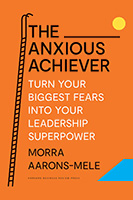
9781647822538The Anxious Achiever: Turn Your Biggest Fears into Your Leadership Superpower by Morra Aarons-Mele

Anxiety disorders are the most common mental illnesses in the world. But in our workplaces, anxiety has been a hidden problem—there in plain sight but ignored. Until now. The Anxious Achiever is a book with a mission: to normalize anxiety and leadership. As leadership expert and self-proclaimed anxious achiever Morra Aarons-Mele argues, anxiety is built into the very nature of leadership. It can—and should—be harnessed into a force for good. Inspired by the popular podcast of the same name, The Anxious Achiever is filled with personal stories, research-based insights into mental health, and lots of practical advice.

9781541700369Awaken Your Genius: Escape Conformity, Ignite Creativity, and Become Extraordinary by Ozan Varol

We say some people march to the beat of a different drummer. But implicit in this cliché is that the rest of us march to the same beat. We sleepwalk through life, find ourselves on well-worn paths that were never ours to walk, and become a silent extra in someone else’s story. Extraordinary people carve their own paths as leaders and creators. They think and act with genuine independence. They stand out from the crowd because they embody their own shape and color. We call these people geniuses—as if they’re another breed. But genius isn’t for a special few. It can be cultivated. This book will show you how. You’ll learn how to discard what no longer serves you and discover your first principles—the qualities that make up your genius. You’ll be equipped to escape your intellectual prisons and generate original insights from your own depths. You’ll discover how to look where others don’t look and see what others don’t see.

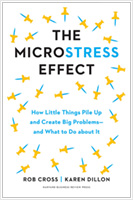
9781647823979The Microstress Effect: How Little Things Pile Up and Create Big Problems–and What to Do about It by Rob Cross and Karen Dillon

There’s a force we encounter every day that we aren’t aware of—and it threatens to derail otherwise promising careers and lives: microstress. This hidden epidemic of small moments of stress has insidiously infiltrated both our work and our personal lives with invisible but devastating effects. Microstress doesn’t trigger the normal stress response in our brains to help us deal with it. Instead, it embeds itself in our minds and accumulates daily, one microstress on top of the other. Unregistered microstress weighs us down, damages our physical and emotional health, and contributes to a decline in our well-being. What’s more, microstress is baked into our lives. The source is seldom a classic antagonist, such as a demanding client or a jerk boss. Instead, it comes from the people with whom we are closest: our friends, family, and colleagues. The good news is that once you understand microstress, you can fight back.

More Titles

9781955884464 9781637742891 9780262047777 9788887100128

For bulk orders call 1-626-441-2024

* * *
“… a mind needs books as a sword needs a whetstone, if it is to keep its edge.”

— George R.R. Martin, A Game of Thrones

* * *
Follow us on Instagram and Twitter for additional leadership and personal development ideas.


Explore More

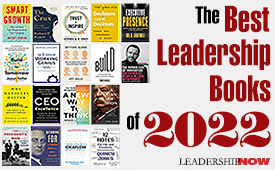
Whats New in Leadership Books Best Books of 2022

from The Leading Blog: A Leadership Blog https://ift.tt/cRMkix3
via WordPress

LeadershipNow 140: March 2023 Compilation

twitter

twitter Here are a selection of tweets from March 2023 that you will want to check out:

See more on twitter Twitter.

* * *
Follow us on Instagram and Twitter for additional leadership and personal development ideas.


Explore More

$ podcasts Burn the Boats

from The Leading Blog: A Leadership Blog https://ift.tt/Hjx2GAe
via WordPress

Fitness Tips Over 40

A lot of things happen to the body as a person approaches middle age. Muscle mass will decrease while fat levels increase. Many people also find it difficult to lose weight compared to their younger years. When this happens, it’s time to introduce a change to the normal exercise routine. Here are four fitness tips to consider for people 40 and above.

Easy Fitness Tips for the Over 40

Lift weights

To put it simply, muscle burns fat, so fitness in the middle-aged years should emphasize building muscle mass. Strength training, such as weight lifting, is the most effective way to achieve this goal. Not only does it build muscle, it also stimulates the metabolism and maintains bone health.

Keep a food journal

It’s very difficult to lose weight without counting calories. Exercise is also more effective for weight loss when it’s paired with a reduced caloric intake. People in their 40s may not be used to having to watch what they eat with the changes in their metabolism. One easy way to track calories is to keep a daily food journal, whether it’s a physical journal or a digital one through an app. This makes it easier to track calories and stay mindful about food choices.

Use weights that are the right size

When it comes to weight lifting, the key is to use a weight that is heavy enough to challenge the muscles. This will build and tone muscle more effectively than if someone chooses a lighter, manageable set of weights. As a rule of thumb, people should opt for weights that are light enough to lift for multiple sets, but heavy enough to make them struggle for the last few reps.

Stay active

In a person’s 40s, it becomes increasingly more important to move throughout the day. A person can achieve this by making small changes to their daily routine, such as an after-dinner walk, choosing to take the stairs over the elevator, or parking just a little bit farther away in the parking lot. During the workday, desk-workers should make sure to pause every 30 minutes to stand up, stretch, and walk for a few minutes.

This article was originally published on RobUrbach.com

Why Swimming is the Perfect Workout

With both of my daughters being swimmers, I started adding swimming into my routine. My daughter and I wake up almost every morning to swim. Being a triathlete, I usually only swam freestyle and didn’t get the full benefit of how good of a workout swimming could be. Focusing on swimming can make your workouts more effective. 

Swimming has the ability to build up your endurance and improve your lung function. Though you may be able to run a fast mile, swimming one will involve more endurance. Many athletes use swimming as endurance training for other activities that require it. Swimming efficiently and effectively uses the oxygen from your lungs. Since you are using the oxygen in a more efficient way, your body could be storing more energy and in turn, can keep you more alert after the activity. 

Swimming can be used as a form of strength training. Since swimming requires you to be in the water, it adds resistance to the training. Unlike running, walking, or hiking, swimming gives you much more resistance since water is denser than air and gives your body more of a weight training work-out than just cardio. Swimming twice a week is similar to lifting light weights during your normal toning routine. Doing the breaststroke for thirty minutes up and down the length of the pool can tone your entire body instead of having to do multiple exercises. 

When people hear “low-impact” in terms of exercise, they tend to think it won’t be an effective way to burn calories. In terms of swimming, this couldn’t be more wrong. Swimming absolutely saves your joints from the high-impact that can come from running and walking but it doesn’t cost you the calories you think you might not burn. Swimming can burn at least 500 calories during an hour session. It all depends on the intensity in which you are swimming. 

You may be looking to switch up your workout routine by adding something new or you need a low-impact workout due to an injury, no matter what your reasoning, swimming is a perfect workout. After running multiple triathlons, I thought I was in amazing shape. Then I get into the pool to race my daughter and start figuring out that I am out of shape in the water. Once we consistently added swimming into my morning routine, I started building the endurance and strength to push through and come close to beating her. I continue to push myself and swimming is definitely benefiting my health. So no matter what your end goals are, swimming could be the perfect workout for you! 

This article was originally published on RobUrbach.com

Effective Exercises That Can Be Done Without Equipment

Exercising is an important part of staying healthy, but unfortunately, not many people have access to all the equipment available at gyms. Here’s the thing, though: you don’t need fancy equipment in order to get a good workout. You actually don’t need equipment at all—there are plenty of ways for you to get the exercise you need without touching a single piece of equipment, all of which are just as effective as using machines at the gym. Using your body weight and gravity will give you just as much of a workout as using dumbbells or lifting weights.

Here are a few exercises you can do without having to rely on any machinery.

Push-Up

The classic push-up is one of the most effective bodyweight exercises you can do. It targets your chest, triceps, and anterior deltoid muscles (the front of your shoulders) as well as your core. Like with all exercise, it won’t be effective unless you do it correctly:

  • Start in a high plank with your hands flat and shoulder-width apart, your wrists under your shoulders.
  • Inhale as you bend your arms to go down, keeping your back flat as you do so. If you can’t keep your back flat your bend all the way down, modify the push-up so your knees are on the floor.
  • Exhale as you go back up into the starting position, then repeat.

Bulgarian Split Squat

Technically you need some equipment for this move, but it doesn’t have to be fancy workout equipment—you can use a chair, a couch, a bench, or whatever you can find of equal heights wherever you’re at. The Bulgarian split squat works your lower-body muscles: your quads, glutes, inner thighs, hamstrings, and calves. Here’s how to do it:

  • Stand with your back facing your bench. Keep your left foot a few feet in front of the bench, then place the top of your right foot on the bench, shoelaces down. Place both hands behind your head.
  • Bend your knees to lower yourself into the split squat, your left knee forming a 90-degree angle and your thigh parallel to the ground. Your right knee should be hovering above the floor. If you’re positioned correctly, your left knee shouldn’t go past your left toes.
  • Push yourself back up with your left leg, then repeat.

If you want to take it a step further, work a push-up into this as well. Once you’re in the down position, place your left foot on the bench, shoelaces down, then bend your elbows to do a decline push-up. Straighten your elbows, place your left foot back on the ground, and repeat.

This article was originally published on RobUrbach.com